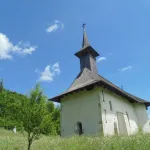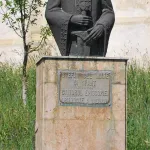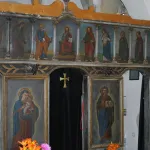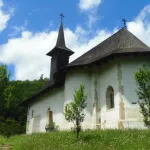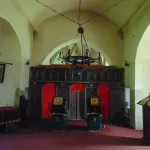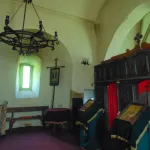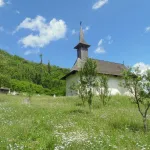



St. 40 Martyrs Monastery of Gherla

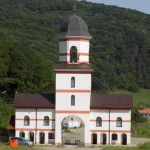
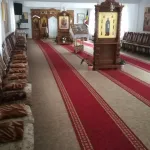
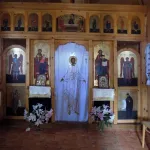
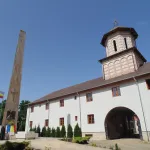
Manastirea Sfintii 40 de Mucenici Gherla, o cladire simpla alba, cu acoperis din lemn, unde oameni se aduna la intrarea principala.

Ho we arrive

The year 2017 was declared by the Holy Synod of the Romanian Ortodox Church an homage dedicated to those who suffered in the communist prisons. On October 1, 2017, the decision was made to establish a monastery in Gherla dedicated to the political prisoners who died in the nearby penitentiary. The location chosen was Cărămidăriei Hill, where a chapel, an exhibition space, a thematic library and a conference room were erected near the cemetery with common graves of the political prisoners from (in) the communist period.

Web: www.memorialulgherla.ro

Facebook: www.facebook.com/MemorialulGherla

“Acoperământul Maicii Domnului” (The Pall of Virgin Mary) Monastery of Floreşti-Tăuţi

Manastirea Acoperamantul Maicii Domnului Floresti, o cladire alba cu detalii rosii si un turn central, situata la poalele unui deal verde.

In the village of Tăuţi, commune Floreşti, at 8 km from Cluj-Napoca in 1994 is put the cornerstone of the monastery of nuns dedicated to the “Pall of Virgin Mary”.

Surrounded on all sides by a young broadleaf forest, the monastic ensemble is built in the Byzantine style, and the painting is done in Fresco technique. Within the monastery it has developed a centre of iconography where are made icons, painted on canvas, wood or glass.

Facebook: www.facebook.com/ManastireaFlorestiAcoperamantulMaiciiDomnului

“Naşterea Maicii Domnului” (The Birth of Virgin Mary) Monastery of Ciucea

Manastirea Nasterea Maicii Domnului Ciucea, o biserica traditionala din lemn cu turn inalt, amplasata intr-o zona verde si impadurita.

In Ciucea locality, Octavian Goga (1881-1938), one of the most important cultural and political personalities of the interwar period, buys the field that belonged to the Hungarian poet Ady Endre (1877-1919). Veturia Goga, the widow of the poet, donated the location to the Romanian state, today the mansion being a museum dedicated to the life and activity of Octavian Goga. Also inside the property was erected the funerary monument of Octavian Goga.

The monastery, located just besides the road E 60 which connects Cluj-Napoca and Oradea, was founded in 1939, recommencing its activity since 1994, after it was closed during the communist period. The wooden church from here was brought in the same year (1939); it is from Salaj County and is currently used by the community of nuns from the monastery.

Website: www.facebook.com/Manastirea-Nasterea-Maicii-Domnului-din-Ciucea

“Sf. Cuvioasă Parascheva” Monastery Râşca-Transilvană

Manastirea Rasca Transilvana, o biserica alba cu acoperis rosu si pridvor sculptat, situata intr-o zona montana deschisa

Râşca Transilvană Monastery is located on the administrative territory of Râşca and Călăţele communes near Fântânele-Beliș Lake. It was founded in 2002 with the patron saint of “St. Pious Parascheva”, the spiritual protector of Moldavia, and the name of Râşca-Transylvania differentiates it from the Râşca monastery in Moldavia, founded by the voivode Petru Rareş.

The monumental church was built between 2003-2018 and follows the classical frames of the Moldavian style, developed during the time of the voivode Stephen the Great of Moldavia, the painting being of neo-Byzantine type made in fresco technique.

Web: www.manastirea-rasca-transilvana.ro

“Înălţarea Domnului” Monastery of Cold Mountain

Manastirea Inaltarea Domnului Muntele Rece, o biserica alba cu acoperis rosu, inconjurata de cruci si vegetatie, situata intr-o zona rurala.

In the Bordești hamlet from Măguri-Răcătău commune, battles took place during the Second World War. On the plateau, at an altitude of 940 m near this hamlet there is a military cemetery where are buried the mountain hunters battalion soldiers who fought in this area.

In 1994, the inhabitants of the area requested the establishment of a monastery on this plateau, known in the area as Heroes, to honor the memory of those who fell in battle. In 1995, the Holy Synod of BOR approved the establishment of the new monastery dedicated to the “Ascension of the Lord”, this religious holiday of the Orthodox denomination being the day when, traditionally, the Romanian people celebrate their fallen heroes on the battlefields. In 1996, the military authorities provided the funds for the redevelopment of the cemetery, according to the project of the Cluj architect Sorin Dan Clinci. The church of the monastery is made of wood and is located near the cemetery.

“Schimbarea la Faţă” Monastery of Cheile Turzii

Manastirea Schimbarea la Fata Cheile Turzii, o cladire alba cu acoperisuri negre, situata pe un deal verde, intr-o zona linistita.

In the area of ​​Turda Gorges, in the 16th century, a monastery known as the monastery on Mount Petrindului is attested. The head of Mihai Viteazul (1595-1601) is brought to this monastery in 1601, where a first funeral service is held. In the 18th century, there was a school in the monastery where the monks ensured the schooling of children from neighboring villages. This school practically ensured the survival of the monastery at the time when Transylvania was occupied by the imperial / Austrian army commanded by General Buccow.

During the 1848’s revolution, the monastery was destroyed, rebuilt in 1933, but during the Second World War, it was destroyed again. Since 1997, in the area where the former monastic hearth existed, was built the monastery dedicated to the Transfiguration.

“Michael-Vodă” Monastery of Turda

Mihai Vodă Monastery

„Mihai-Vodă” Monastery dedicated to “St. Archangels Michael and Gabriel ”from Turda is located on the plateau where, in 1601, was assassinated the prince who achieved the first political union of the Romanian principalities – Wallachia, Transylvania and Moldavia, voivode Mihai Viteazul (1558-1601). The construction works started in 2002 at the initiative of His Eminence Bartholomew Anania, Archbishop of Vad, Feleac and Cluj on a place near the funerary monument of the great ruler provided by local authorities, being the only monastery in the Archdiocese of Cluj built at the initiative of the hierarch.

The monastery is an architectural copy of the “Mihai-Vodă” monastery founded in Bucharest in 1591 by Mihai Viteazul. The church architecture is a classic one for an orthodox church, the one of Greek cross, the painting being made in neo-Byzantine style in the fresco technique. The enclosure of the monastery is rectangular, closed on three sides in the form of a fortress, and the east side completes the enclosure in the form of a stone wall. The main entrance is on the west side, above the entrance is the bell tower. Also in the jurisdiction of the Mihai Vodă monastery is the Hermitage of St. John the Evangelist from Pădureni village, Triteni commune.

Web: www.manastirea-mihaivoda-turda.ro

“The Ascension of the Holy Cross” Monastery of Căşiel

Manastirea Inaltarea Sfintei Cruci Casiel, o cladire de mari dimensiuni cu domuri rosii, situata intr-o zona verde si linistita.

Approximately 25 km from Dej, on the road that connects the Someș Valley and the Lăpuș Country, on the Cășielului Valley, an Orthodox monastery dating from the 18th century was attested. According to the documents from the archive, Solnoc-Dăbâca is the second Orthodox monastery in this area and the only one whose exact data on its establishment are known. The Ascension of the Holy Cross Monastery was founded in 1765 by Pahomie (Filip) Georgiu. Inside this monastery there was also a school for children from neighboring villages. Between 1856 and 1956, the monastery had only the role of a village church, so that between 1956-1959 it returned to the status of monastery.

Following decree 410 of 1959, the monastery was abolished until 1991, when, in the new historical context, the monastery was re-established. The most important legacy preserved from the glory days of the old monastery is the wooden church dating from the 18th century. The church is considered one of the important monuments of Romanian architecture in the Transylvanian area due to the way it was built: oak beams joined in the swallowtail technique placed on a stone foundation.

Web: www.protopopiatulortodox.ro/manastiri/manastirea-casiel

Phone: (004) 0769-492.705

“St. Stephen Vodă” Monastery of Vad

Manastirea Vad jud Cluj, o biserica traditionala alba cu acoperis de sindrila si turn inalt, situata intr-o zona verde si linistita

Vad Monastery is located in the commune with the same name, situated at about 12 km from Dej. In the 14th century, a monastery was built in Vad with the support of the Balc and Drag brothers, nobles from Maramureș. The ruins of this monastery, in the 15th and 16th century, with the support of the rulers of Moldavia Stephen the Great and Petru Rareș, the monastery served also as an episcopy.

The church dedicated to the “Assumption” was made of stone, in Gothic style, with elements of the Moldavian style. The geometric plan is a Moldavian triconch plan, divided into narthex, altar with lateral semicircular apses. From the original painting is preserved a small fragment representing the face of a saint; this fragment is found in the holy altar above the proscomidiary.

 The precinct was destroyed, leaving only the church from the original monastery. The church continued to function as a church of Vad village until 2012, currently the Archdiocese of Vad, Feleac and Cluj, at the initiative of His Eminence Andrei, decided to move the status to a monastery dedicated to “St. Stephen Vodă ”.