


Palace of Finance

Palatul de Finanțe Cluj, o clădire impunătoare cu fațadă roșie și galbenă, detalii arhitecturale elegante și un dom roșu.

The building was built at the end of the 19th century, with a klinker brick facade, after the project of the Cluj architect Frigyes Maetz and it’s an integral part of the architectural ensemble in Avram Iancu Square – along with the Palace of Justice, the Orthodox Metropolitan Palace and the Regional Palace of CFR.

A peculiarity of this building is the fact that, since its construction until now, it has kept its destination as headquarters of the Cluj financial administration.

Teleki Palace

Palatul Teleki Cluj, o clădire istorică cu fațadă roz și albă, acoperiș roșu și balcon central, situată pe o stradă liniștită.

On the northern side of Kogălniceanu Street, Count Ádám Teleki built one of the most representative palaces in the late Baroque style. The building was constructed at the end of the 18th century, in the shape of the U letter, its basement extending over almost the entire surface of the building. The entrance hallway from Kogălniceanu Street reproduces in miniature the hallway from Bánffy Palace in Cluj-Napoca. The roof of this wing is attic type and includes elements typical of the late Baroque.

Toldalagy – Korda Palace

Palatul Toldalagy-Korda, o clădire istorică cu fațadă galbenă și albă, balcon central și detalii arhitecturale elegante, situată pe o stradă îngustă.

At the intersection of I.C. Brătianu and Hermann Oberth streets a baroque palace is built, the former residence of an important noble family of Cluj, formed by Count Laszlo Toldalagi and Countess Anna Korda. The palace was built in the early 19th century, in an architectural style of transition from baroque to classicism. The entrance is flanked by columns with ionic capitals. Above the entrance we find the carved coats of arms of the two families.

The last owner of the building was the writer and politician Miklos Banffy. The composer Gheorghe Dima also lived here for a while. Currently, the palace is the administrative building of the “Babeş-Bolyai” University.

“Sfântul Nicolae” Orthodox Church

Biserica Ortodoxa Sfantul Nicolae Cluj Napoca, o cladire traditionala cu elemente bizantine, picturi religioase si un pridvor deschis

The “Saint Nicholas” Church on Horea Street is the third Romanian church, in chronological order, built in the city of Cluj-Napoca. It is the first Byzantine style church built in Cluj-Napoca, the initiative for its construction was taken by Bishop Nicolae Ivan.

The project was designed by the architect George Cristinel, who was one of the architects of the Royal House of Romania, and the work was supervised by the engineer Tiberiu Eremia, who also supervised the works at the Reunification Cathedral in Alba Iulia. The iconostasis was made in Constantinople and was donated by Queen Maria of Romania. The church was built in record time between July and September 1932, becoming until 1933 the episcopal cathedral of Cluj.

Berde Palace

Palatul Berde Cluj, o clădire istorică impunătoare cu detalii arhitecturale elaborate și un turn central, situată pe colțul unei străzi.

At the end of the 19th century, Samuel Benigni, an important businessman, vice-president of the Cluj Chamber of Commerce and Industry, builds an imposing building in secession style. It is named after a famous family from Cluj in the 19th century, the Berde family, who lived in this building. A representative of the family was Aaron, the first rector of the Cluj University.

It is a representative building for the Belle Époque architecture of the city, with two levels and towers that guard one of the Someș river banks.

Szeky Palace

Palatul Szeky Cluj-Napoca, o clădire istorică cu fațadă din cărămidă roșie, detalii arhitecturale gotice și turnuri ornamentate.

The building is one of the most beautiful architectural monuments of the Cluj modern era. It was designed by the Budapest architect Samu Pecz in the secession style of the late 20th century, being a combination of several styles – baroque, gothic, neo-gothic. This style is also called eclectic or empire.

The palace was the residence of Miklos Szeky, a pharmacist from Cluj, university professor, who decided to build this palace, on the ground floor of which he opens a pharmacy. The palace was put into use in 1893.

The ground floor and basement of the palace are covered with limestone slabs, and the floors with exposed brick. On the main gate we find a rich ornamentation, panels in diamonds and rosettes shapes, neo-Gothic motifs, acorns and oak branches and the monogram of the owner “SzM”, framed by oak leaves.

Administrative Palace

Palatul Prefecturii Cluj, o clădire impunătoare cu detalii arhitecturale elaborate, balcoane și acoperiș roșu.

The Prefecture Palace or the Administrative Palace was built at the beginning of the 20th century in the French secession style for the Cluj Chamber of Commerce and Industry. In the period following the Second World War, it functioned as a city hall, the county headquarters of the Romanian Communist Party, the headquarters of the Cluj County Council, and at present it is the headquarters of the Cluj County Prefect Institution.

Palace of Justice

Palatul de Justiție Cluj, o clădire impunătoare cu fațadă roșie și detalii arhitecturale elegante, situată la intersecția unor străzi aglomerate.

The Palace of Justice was built between 1900-1902, on the corner between Calea Dorobanţilor and Stephen the Great Square. It is an eclectic style building, representative of Belle Époque architecture. It was designed to be a vast palace, with numerous spaces that can be used as offices, entrances and stairs in monumental style leading to the halls of festivities and meetings. There are two entrances: one on the northern façade and a second on the western one. It has at the entrances a portico consisting of four Doric columns that support a balcony on the first floor.

The Teacher’s House

Casa Învăţătorului Cluj, o clădire impozantă din cărămidă roșie cu detalii arhitecturale istorice și ferestre mari.

This building located in Stephen the Great Square was build between 1902-1903, initially it was a students dorm for the ones attending school of teachers or for the teachers children who completed their studies in Cluj.

During the First World War the building was used as a military hospital, and after the Second World War it was used by the Economic Sciences Faculty, after which, the County School Inspectorate carried out its activity in the building. Currently, several private companies have their headquarters in this building.

“Bob” Greek-Catholic Church

Biserica Greco-Catolică „Bob”

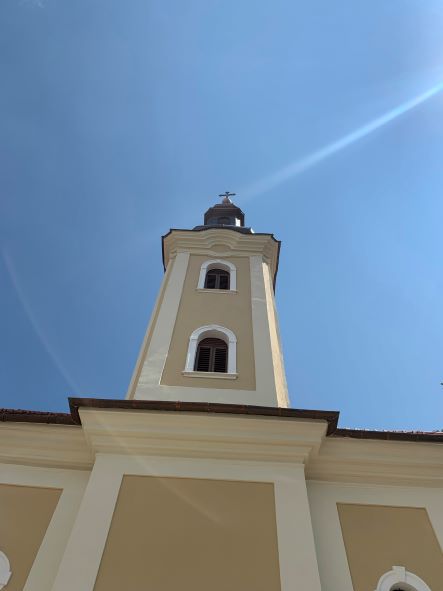
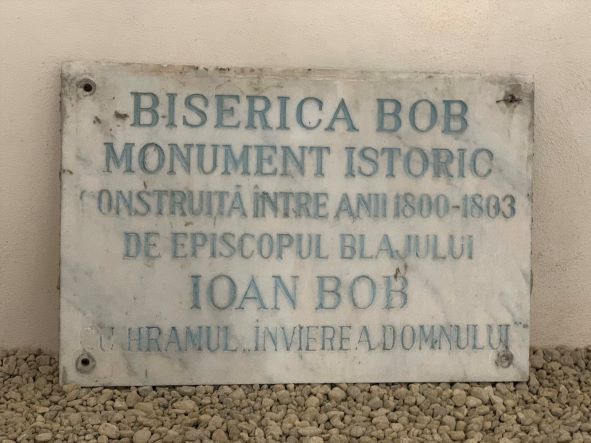
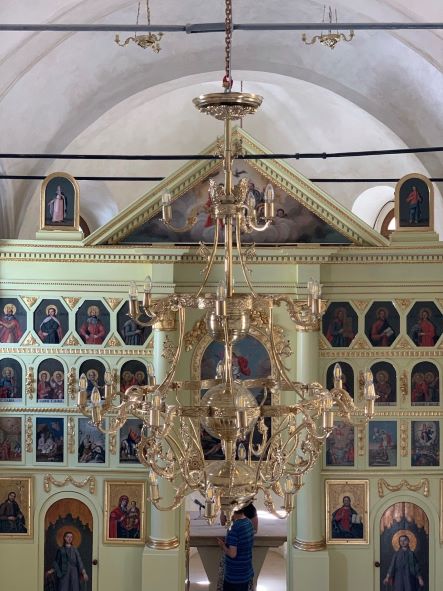
The first Romanian church built inside the city of Cluj was Bob Greek Catholic Church. It was built with the tacit consent of the local authorities, being initially declared a “food store”, as the Romanian community did not have the right to build in the city.

The name with which it has remained in the history of the city is that of the united bishop Ioan Bob, the one who financially supported the purchase of the property and the construction of the church. The building preserves the elements specific to the Baroque style, the project belonging to the architect Iosif Leadear who supervised the works during 1800 -1803. The first Romanian school in Cluj was founded in the 19th century, and the church became one of the important landmarks in the life of the Romanian community. In 1948 it passed into the patrimony of the Romanian Orthodox Church, after 1990 it was returned to the Romanian Church United with Rome.