


Science Factory – Museum of Illusions, Turda

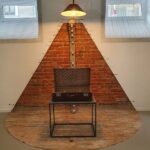
Imaginea prezintă interiorul Muzeului Iluziilor din Turda, un spațiu interactiv dedicat experimentelor vizuale și științifice

How we arrive

Address: Romană Square, no. 17-19, Turda

Phone: (004) 0740-365.699

E-mail: [email protected]

Web: www.facebook.com/muzeuliluziiloroptice

Schedule: Saturday – Sunday: 10:00 – 17:00

The Museum of Science and Optical Illusions is the latest project of the Pluto Astronomical Association, following the same educational line that can be found at the Mobile Planetarium or the Museum of Mobile Illusions.

Being a permanent location with a generous space of 700sqm, the volunteers of the Pluto Astronomical Association managed to build the only maze of mirrors in Transylvania, the longest Vortex tunnel, a huge Ames room, an UpSideDown room, teaching holograms, a virtual sand box and many other exhibits that combine science and optical illusions. The guides are supported by the well-known “astronomical storytellers” from the Mobile Planetarium, Dan Coltea and Adi Filpisan shows.

At the same time, there are live experiments that complete the school curriculum, being a real support for students, teachers and parents.

The location of the museum is an unconventional one, the former Turda Brewery, currently a historical monument. In the arrangement of the museum, an attempt was made to preserve and enhance the building, the resulting space being one in which the brick together with wood and metal helps build an authentic industrial atmosphere, but at the same time full of warmth and hospitality.


The Monumental Ensemble from Tăușeni

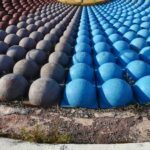
Ansamblul Monumental de la Tăușeni, decorat cu un curcubeu impresionant care domină compoziția. Acest monument unic simbolizează pacea și armonia,

Address: Tăușeni village, Bonțida commune

The idea of creating this concept started in 1994, with the launch of a project competition for Contemporary Art. The ensemble “Signs to the sky for rain and rainbow” today, was created over the years, starting from the arrangement of the space destined for the monumental complex, to the placement of the component “signs” in their final form.

Located on a hill in the native village of the author Alexandru Chira, the monumental ensemble originally entitled “Installation for remembrance, for suggesting rain and rainbow”, delights our eyes with 18 subassemblies. To find out the meaning of each subset, to enter the author’s mind and understand the idea of creating each work, you can access the link www.alexandruchira.ro/ansamblul-monumental.

If we made you curious, do not hesitate to visit the open-air museum, where you can admire all the exhibits that are part of this project. It is located in the village of Tăușeni, Bonțida commune, about 40 km from Cluj – Napoca. The entrance is free, and when climbing, visitors will be greeted by an exhortation from the author: “Remember, climbing this hill bring with you a cup or a cup of spring water, empty it into the Fountain of the Mirror. The water of the spring will meet the water of heaven and together – the depths of the earth and the sky – will give birth to the ladder of the rainbow, of the last ascension ”…;

Muzeon – Jewish History Museum, Cluj-Napoca

Imaginea prezintă o expoziție modernă din cadrul Muzeului Evreiesc din Cluj, cu valize simbolice și hărți, evocând istoria și migrația comunității evreiești din regiune

Address: Virgil Fulicea Street, no. 3, Cluj – Napoca

E-mail: [email protected]

Phone: (004) 0364-100.472, (004) 0364-153.654

Web: www.muzeon.ro

Schedule: Tuesday – Sunday: 10:00 – 18:00

Muzeon is an innovative and interactive museum that tells the story of the Jewish community in Cluj, Romania. As you get there, you will realize that you are not stepping into a traditional museum, but into a space focused on the experience of personal, real, lived life stories, rather than on exhibits. During your visit to the museum, you will be able to listen to the personal story of a person who lived in the past century, as if he were there, next to you and who will accompany you throughout the experience.

The stories you will hear have been reconstructed on the basis of the archived materials and performed by professional actors. You can listen to the stories in three languages: Romanian, English or Hungarian. In addition to the audio guide, which animates the experience, the museum has numerous interactive exhibits and Virtual Reality glasses. You will learn a lot about Jewish customs and traditions, about the impact of the Jewish community on local culture and how important historical events (told in chronological order) were felt and experienced by the three guides.


Kallós Zoltán Ethnographic Collection

Imaginea reprezinta un model floral traditional din colectia etnografica Kallós Zoltán, cu motive vegetale rosu-verde, simbolizand natura si traditia artistica rurala

Address: Răscruci village, Bonțida commune

Phone: (004) 0746-309.057

E-mail: [email protected]

Web: www.kallosalapitvany.ro/ro/prima-pagina/

Schedule: Tuesday–Sunday: 09:00 – 16:00 

The collection, located in the center of Răscruci commune, is the result of the ethnographer Kallós Zoltán activity, who tried to offer an extensive image of the cultural heritage of the various ethnic communities in the Transylvanian area. The treasure is composed of a number of 6000 elements that illustrate the life of the Hungarian community in the Transylvanian Plain, Ghimeș area, Ţara Călatei, of the Csango community in Moldova as well as of the Romanian and Saxon communities in Transylvania.

The exhibition space is divided into 12 rooms, in which there are elements of folk costumes, furniture, metal and wooden objects specific to the daily life of the four mentioned communities, a library, as well as an archive of traditional music records.

Prof. Aurel Bulbuc Iclod Ethno-Archeology and History Museum

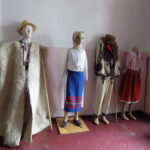
un colț tradițional din Muzeul de Etno-Arheologie și Istorie Prof. Aurel Bulbuc din Iclod, cu obiecte de uz casnic vechi și unelte specifice culturii rurale locale

Address: Iclod village, Iclod commune

Phone: (004) 0745-757.622

In the Iclod village area, since 1975, the history teacher and the director of the school in the commune, Aurel Bulbuc, managed with the help of specialists from the National Museum of History of Transylvania to discover important vestiges from the prehistoric and ancient period. In 1987, some of these discoveries were exhibited in a museum inaugurated in Iclod in a mansion that belonged to the Poruțiu family. To this exhibits was added the ethnographic collection of Professor Aurel Bulbuc. Currently, the collection is exhibited in the spaces of the Cultural Center located in the vicinity of the Iclod City Hall, and as a sign of appreciation for the teacher’s activity, the museum was named the Prof. Aurel Bulbuc Ethno-Archeology and History Museum.


Poarta de su’Feleac Ethnographic Collection

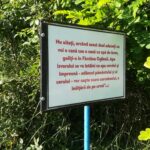
Muzeului Poarta de su Feleac, inscripționată cu un mesaj care simbolizează ospitalitatea și valorile comunității locale

Address: Colonia Sopor Street, no. 19B, Cluj-Napoca

Phone: (004) 0766-529.550

E-mail: [email protected]

Web: www.facebook.com/poartadesubfeleac

On January 15, 2014, on the 164th birth anniversary of the national poet Mihai Eminescu, an ethnographic museum collection was inaugurated in the Colonia Sopor neighborhood in Cluj-Napoca. The exhibits belong to Mr. Gh. Căpușan, who organized the presentation of the 2000 traditional objects on his personal property. In the museum there are folk costumes belonging to the three historical communities of Transylvania, the Romanian, Hungarian and German community, peasant households tools, icons, oil lamps, books of worship (the most important is a gospel from 1850).


Sic Dance Museum

casă tradițională cu acoperiș de stuf din Muzeul Dansului Sic, reflectând arhitectura specifică regiunii și cultura dansului tradițional maghiar păstrată în comunitate

Address: Second Street, no. 16, Sic village, Sic commune

Phone: (004) 0747-212.988, (004) 0264-228.222 

E-mail: [email protected]

Web: www.hollandmihal4.wixsite.com/csipkeszegfoundation

The Sic village is a special ethnographic space, the majority of Hungarian community in this area still preserving ethnographic traditions. In 2004, a Dutch citizen bought a so-called dance house on Csipkeszeg Street. He restored this house and organized a museum collection dedicated to traditional dances from Sic. In time, he managed to buy and rehabilitate another traditional house to which he added a barn built also in traditional style. Currently, the Sic Dance Museum exhibits a collection of 460 pairs of boots used in traditional dance.


Mera Buffalo Museum

Muzeului Bivolului Mera, cu o colecție de unelte tradiționale și hamuri, dedicate creșterii bivolilor și evidențierii importanței acestora în viața rurală.a

Address: Mera village, Baciu commune

Telefon: (004) 0727-492.819

The traditional activity of the Mera village, Baciu commune, inhabitants was animal husbandry, mostly buffalo breeding, at the end of the 19th century in this area being registered among the largest buffalo herds in the Transylvanian area. At the initiative of the former director of this village school, Varga Gyorgy, in 2009, a Buffalo Museum was inaugurated in one of the buildings that belonged to the village educational unit. In this museum are exhibited 1000 objects related to the breeding and exploitation of this animal: carriages, sleds, yokes, harnesses, forks, rakes, cowbells, milk collection and processing pots. In the museum collection are exhibited photographs, documents and maps proving the antiquity of this activity in the region.


Mărișel Village Museum

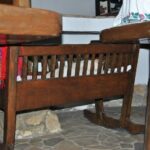
interiorul tradițional al Muzeului Satului Mărișel, cu un pat specific zonei, decorat cu țesături și cusături autentice, reflectând viața și cultura rurală din această regiune.

Address : Mărișel village, Mărișel commune

Mărișel commune is one of the most important places in Țara Moţilor located on the Cluj county territory. In the center of this place, the community built a traditional house in which they exhibited fundamental elements for the inhabitants of the area: area specific costumes, cult objects and cult books – some of these books being part of the Romanian old book heritage.


The Hostenians Museum Cluj

Imaginea prezinta o reprezentare istorica a unei biserici si a unei zone rurale, asociata cu Muzeul Hostezenilor.

Address : 21 december 1989 Blvd., no. 41 

Access : at request Monday-Friday 9:00-12:00, 16:00-18:00

Cost : Entrance is free with a companion from the Reformed Parish

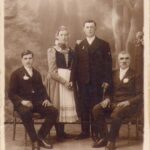
The Hostenians were one of the most important communities of old Cluj, with a specific clothing, and which remained in the collective memory by the fact that they were the ones who supplied the city with vegetables. In order to preserve the memory of this community, the lawyer Jósef Bányai, a descendant of this community, built a museum.

The museum is organized on three floors, within the reformed parish on 21 December 1989 Boulevard and faithfully describes a household specific to this community. On the first floor we find a kitchen where you can find the baskets with which the vegetables were taken to the market, on the second level there is a bedroom with a bed, canvas on the walls, photos, a closet and a hanger. On the third level we find a space with photos that shows the daily life of the Hostenians.