



Science Factory – Museum of Illusions, Turda

Imaginea prezintă interiorul Muzeului Iluziilor din Turda, un spațiu interactiv dedicat experimentelor vizuale și științifice

Address: Romană Square, no. 17-19, Turda

Phone: (004) 0740-365.699

E-mail: [email protected]

Web: www.facebook.com/muzeuliluziiloroptice

Schedule: Saturday – Sunday: 10:00 – 17:00

The Museum of Science and Optical Illusions is the latest project of the Pluto Astronomical Association, following the same educational line that can be found at the Mobile Planetarium or the Museum of Mobile Illusions.

Being a permanent location with a generous space of 700sqm, the volunteers of the Pluto Astronomical Association managed to build the only maze of mirrors in Transylvania, the longest Vortex tunnel, a huge Ames room, an UpSideDown room, teaching holograms, a virtual sand box and many other exhibits that combine science and optical illusions. The guides are supported by the well-known „astronomical storytellers“ from the Mobile Planetarium, Dan Coltea and Adi Filpisan shows.

At the same time, there are live experiments that complete the school curriculum, being a real support for students, teachers and parents.

The location of the museum is an unconventional one, the former Turda Brewery, currently a historical monument. In the arrangement of the museum, an attempt was made to preserve and enhance the building, the resulting space being one in which the brick together with wood and metal helps build an authentic industrial atmosphere, but at the same time full of warmth and hospitality.


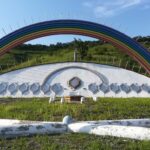
The Monumental Ensemble from Tăușeni

Ansamblul Monumental de la Tăușeni, decorat cu un curcubeu impresionant care domină compoziția. Acest monument unic simbolizează pacea și armonia,

Address: Tăușeni village, Bonțida commune

The idea of creating this concept started in 1994, with the launch of a project competition for Contemporary Art. The ensemble “Signs to the sky for rain and rainbow” in the actual form, was created over the years, starting from the arrangement of the space destined for the monumental complex, to the placement of the component “signs” in their final form.

Located on a hill in the native village of the author Alexandru Chira, the monumental ensemble originally entitled „Installation for remembrance, for suggesting rain and rainbow“, delights our eyes with 18 different pieces. To find out the meaning of each piece, to enter the author’s mind and understand the idea of creating each work, you can access the link www.alexandruchira.ro/ansamblul-monumental.

If we made you curious, do not hesitate to visit the open-air museum, where you can admire all the exhibits that are part of this project. It is located in the Tăușeni village, Bonțida commune, about 40 km from Cluj – Napoca. The entrance is free of charge, and when climbing, visitors will be greeted by a message from the author: “Remember, when climbing this hill bring with you a cup or a cup of spring water, empty it into the Mirror Fountain. The water of the spring will meet the water of heaven and together – the depths of the earth and the sky – will give birth to the ladder of the rainbow, of the last ascension ”….

Muzeon – Jewish History Museum, Cluj-Napoca

Imaginea prezintă o expoziție modernă din cadrul Muzeului Evreiesc din Cluj, cu valize simbolice și hărți, evocând istoria și migrația comunității evreiești din regiune

Address: Tipografiei Street, no. 25, Cluj – Napoca

E-mail: [email protected]

Phone: (004) 0364-100.472, (004) 0364-153.654

Web: www.muzeon.ro

Schedule: Tuesday – Sunday: 10:00 – 18:00

Muzeon is an innovative and interactive museum that tells the story of the Jewish community in Cluj, Romania. As you get there, you will realize that you are not stepping into a traditional museum, but into a space focused on the experience of personal, real, lived life stories, rather than on exhibits. During your visit to the museum, you will be able to listen to the personal story of a person who lived in the past century, as if he were there, next to you and who will accompany you throughout the experience.

The stories you will hear have been reconstructed on the basis of the archived materials and performed by professional actors. You can listen to the stories in three languages: Romanian, English or Hungarian. In addition to the audio guide, which animates the experience, the museum has numerous interactive exhibits and Virtual Reality glasses. You will learn a lot about Jewish customs and traditions, about the impact of the Jewish community on local culture and how important historical events (told in chronological order) were felt and experienced by the three guides.


Kallós Zoltán Ethnographic Collection

Imaginea reprezinta un model floral traditional din colectia etnografica Kallós Zoltán, cu motive vegetale rosu-verde, simbolizand natura si traditia artistica rurala

Address: Răscruci village, Bonțida commune

Phone: (004) 0746-309.057

E-mail: [email protected]

Web: www.kallosalapitvany.ro/ro/prima-pagina/

Schedule: Tuesday–Sunday: 09:00 – 16:00 

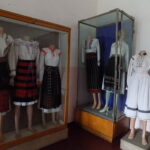
The collection, located in the center of Răscruci commune, is the result of the ethnographer Kallós Zoltán activity, who tried to offer an extensive image of the cultural heritage of the various ethnic communities in the Transylvanian area. The treasure is composed of a number of 6000 elements that illustrate the life of the Hungarian community in the Transylvanian Plain, Ghimeș area, Ţara Călatei, of the Csango community in Moldova as well as of the Romanian and Saxon communities in Transylvania.

The exhibition space is divided into 12 rooms, in which there are elements of folk costumes, furniture, metal and wooden objects specific to the daily life of the four mentioned communities, a library, as well as an archive of traditional music records.

More information can be consulted by accessing the link www.kallosalapitvany.ro

Prof. Aurel Bulbuc Iclod Ethno-Archeology and History Museum

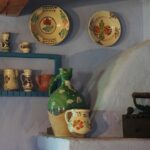
un colț tradițional din Muzeul de Etno-Arheologie și Istorie Prof. Aurel Bulbuc din Iclod, cu obiecte de uz casnic vechi și unelte specifice culturii rurale locale

Address: Iclod village, Iclod commune

Phone: (004) 0745-757.622

Im Gebiet des Dorfes Iclod gelang es dem Geschichtslehrer und Direktor der Schule in der Gemeinde, Aurel Bulbuc, seit 1975 mit Hilfe von Spezialisten des Nationalmuseums der Geschichte von Transsilvanien, wichtige Überreste aus der prähistorischen und antiken Zeit zu entdecken. ​Im Jahr 1987 wurden einige dieser Entdeckungen in einem in Iclod eingeweihten Museum in einem Herrenhaus ausgestellt, das der Familie Poruțiu gehörte. ​Zu diesen Exponaten wurde die ethnografische Sammlung von Professor Aurel Bulbuc hinzugefügt. Derzeit wird die Sammlung in den Räumen des Kulturzentrums ausgestellt, das sich in der Nähe des Rathauses von Iclod befindet, und als Zeichen der Wertschätzung für die Tätigkeit des Lehrers wurde das Museum Prof. Aurel Bulbuc Ethno-Archäologie- und Geschichtsmuseum genannt.

Poarta de su’Feleac Ethnographic Collection

Muzeului Poarta de su Feleac, inscripționată cu un mesaj care simbolizează ospitalitatea și valorile comunității locale

Adresa: Str. Colonia Sopor, nr. 19B, Cluj-Napoca

Telefon: (004) 0766-529.550

E-mail: [email protected]

Web: www.facebook.com/poartadesubfeleac

Am 15. Januar 2014, zum 164. Geburtstag des Nationaldichters Mihai Eminescu, wurde im Viertel Colonia Sopor in Cluj-Napoca eine ethnografische Museumssammlung eingeweiht. ​Die Exponate gehören Herrn Gh. Căpușan, der die Präsentation der 2000 traditionellen Objekte auf seinem persönlichen Eigentum organisierte. Im Museum gibt es Volkstrachten, die zu den drei historischen Gemeinschaften von Transsilvanien gehören, der rumänischen, ungarischen und deutschen Gemeinschaft, Werkzeuge bäuerlicher Haushalte, Ikonen, Öllampen, Kultbücher (das wichtigste ist ein Evangelium von 1850)

Sic Dance Museum

casă tradițională cu acoperiș de stuf din Muzeul Dansului Sic, reflectând arhitectura specifică regiunii și cultura dansului tradițional maghiar păstrată în comunitate

Adresse: II Straße, 16, Sic Dorf, Sic Gemeinde

Telefon: (004) 0747-212.988, (004) 0264-228.222 

E-mail: [email protected]

Web: www.hollandmihal4.wixsite.com/csipkeszegfoundation

Das Dorf Sic ist ein besonderer ethnografischer Raum, wobei die Mehrheit der ungarischen Gemeinschaft in diesem Gebiet immer noch ethnografische Traditionen bewahrt.

Im Jahr 2004 kaufte ein niederländischer Staatsbürger ein sogenanntes Tanzhaus in der Csipkeszeg-Straße. Er restaurierte dieses Haus und organisierte eine Museumssammlung, die den traditionellen Tänzen aus Sic gewidmet ist. ​Mit der Zeit gelang es ihm, ein weiteres traditionelles Haus zu kaufen und zu rehabilitieren, dem er eine ebenfalls im traditionellen Stil gebaute Scheune hinzufügte. Derzeit stellt das Sic-Tanzmuseum eine Sammlung von 460 Paaren von Stiefeln aus, die im traditionellen Tanz verwendet werden.


Feleacu Monastery Museum

maginea prezintă interiorul Muzeului Mănăstirii Feleacu, cu exponate religioase, icoane și artefacte istorice, într-un spațiu amenajat pentru a conserva tradiția

Address: Feleacu village, Feleacu commune

Phone: (004) 0264-237.257, (004) 0744-697.409

The Feleacu village represented an important landmark in the history of the Romanian Orthodox Church in Transylvania: in the 11th century there is a monastery in the area, in the 15th century, Feleacul was the residence of the Romanian Orthodox Metropolitan Bishop of Transylvania, and since the 17th century, becomes one of the most important iconographic centers of the region through the church school of wood painting, whose leading personalities were the painters Nistor and Nichita.

Currently, at the initiative of the abbot Alexandru Ghenț, a monastery museum was organized with two exhibition spaces: one inside the monastery and a museum space inside the church of the historical monument Sf. Cuvioasa Paraschiva, the former cathedral of the Feleac Archdiocese from the 15th century.

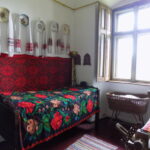
Inside the monastery courtyard there is a museum house. It is a faithful copy of a Romanian Feleacu household from the 19th century, presenting both externally and internally such a household architecturally and also through the inside exhibits.

In the narthex of the church historical monument St. Cuvioasa Paraschiva was arranged a museum space with showcases in which are exposed traditional costumes of the Feleacu community, document photos, a collection of cult books belonging to the national heritage of old Romanian book, and in the narthex , we find an impressive collection of glass icons painted in the technique of the iconographic school from Nicula and 17th century wood icons painted by the masters from the Feleacu school.


David Prodan Museum

Imaginea prezinta intrarea Muzeului Memorial David Prodan din Cluj-Napoca. Cladirea, cu un design simplu si ferestre mari, este inconjurata de verdeata,

Adresse: Academician David Prodan Straße, 1

Telefon: (004) 0364–109.966

E-mail: [email protected]

Web: www.muzee.ubbcluj.ro

Öffnungszeiten: Montag–Freitag: 09:00–13:00

In 2018, Babeș-Bolyai University Cluj-Napoca inaugurated a museum space dedicated to one of the most important academic personalities of Romania, the historian, university professor and academician David Prodan. The George Baritiu History Institute, Babeș-Bolyai University, the State Archives, the Lucian Blaga University Library, the Library of the Romanian Academy are the cultural institutions of Cluj related to the professional activity of David Prodan.

In the house where the historian lived, today we find the museum dedicated to him, which is organized in three distinct spaces:

The permanent exhibition containing personal objects, photographs, correspondence and manuscripts of David Prodan; Temporary exhibition hall, also used for conferences and workshops; David Prodan Library, which can be explored by those interested in the history field.


The Hostenians Museum Cluj

Imaginea prezinta o reprezentare istorica a unei biserici si a unei zone rurale, asociata cu Muzeul Hostezenilor.

Address : 21 december 1989 Blvd., no. 41 

Access : at request Monday-Friday 9:00-12:00, 16:00-18:00

Cost : Entrance is free with a companion from the Reformed Parish

Die Hostenianer waren eine der wichtigsten Gemeinschaften des alten Cluj, mit einer spezifischen Kleidung, und die im kollektiven Gedächtnis durch die Tatsache blieben, dass sie diejenigen waren, die die Stadt mit Gemüse versorgten. ​Um das Gedenken an diese Gemeinschaft zu bewahren, baute der Anwalt Jósef Bányai, ein Nachkomme dieser Gemeinschaft, ein Museum.

​Das Museum ist auf drei Stockwerken innerhalb der reformierten Gemeinde am 21. Dezember 1989 Boulevard organisiert und beschreibt getreu einen für diese Gemeinschaft spezifischen Haushalt. ​Im ersten Stock finden wir eine Küche, wo man die Körbe finden kann, mit denen das Gemüse zum Markt gebracht wurde, auf der zweiten Ebene gibt es ein Schlafzimmer mit einem Bett, Leinwand an den Wänden, Fotos, einem Schrank und einem Kleiderbügel. Auf der dritten Ebene finden wir einen Raum mit Fotos, der das tägliche Leben der Hostenianer zeigt.